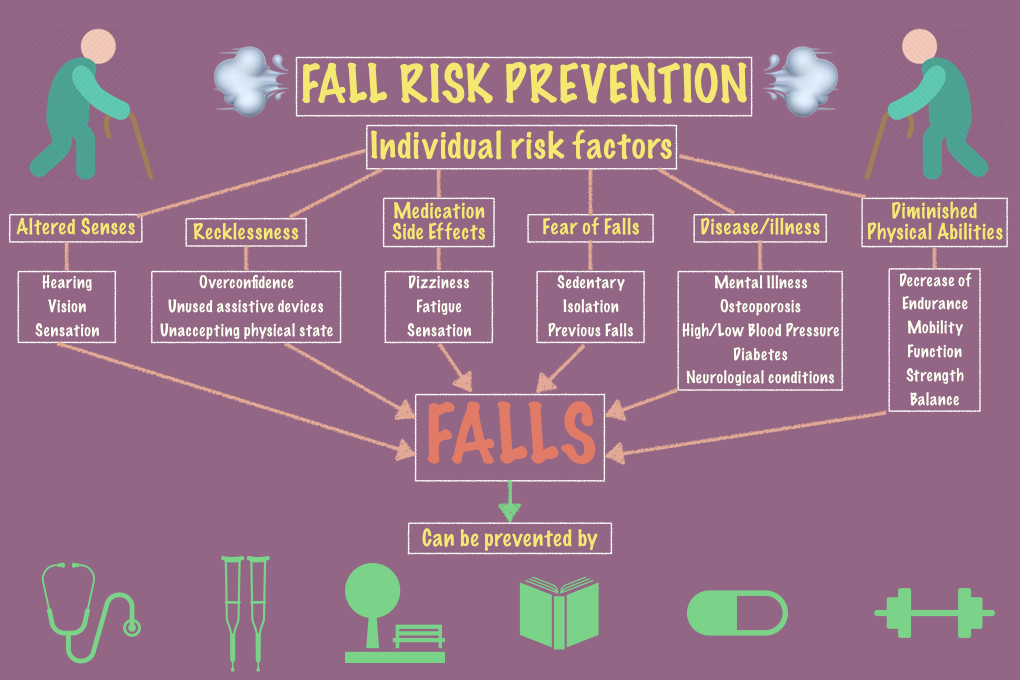
Want to learn how to prevent a fall? Here are some tips on preventing a fall.
- Use an assistive device if needed
- If you feel your balance is not good, using an assistive device may help with making you feel more stable.
- Assistive devices include: walker, cane, crutch, etc.
- Get rid of clutter
- Too much clutter leads to the spaces becoming tight and difficult to get around. It can also be a tripping hazard with loose wires and cords. Get rid of the things you don’t need or use anymore.
- For example: You are 2 people living in a home and you have 4 types of couches in the living room. Get rid of some of them and it’ll create more space for you to walk around.
- Remove carpets & rugs
- Carpets and rugs can be a huge tripping hazard.
- Carpets and rugs also put you on an uneven surface when standing on them causing them to make you lose your balance.
- Educate yourself
- This applies for anything! Educate yourself on your medical condition, what exercises to do to help strengthen those important muscles, etc. You are even educating yourself right now to prevent a fall!
- Go outdoors
- Staying indoors and living a sedentary lifestyle will increase your risk of falls. Sitting inside all day and watching tv or doing absolutely nothing is going to weaken all your muscles, deprive you of vitamin D and you’ll lose important mobility for things that we do all the time; such as walking or standing up.
- Go outside for a walk, get some vitamin D and give your lungs some fresh air.
- Visit your doctor & get regular checkups
- When we’re younger, we can get away from a visit to the doctor every now and then but as we age, our bodies start developing diseases and illness. The signs and symptoms of the illness/disease can be bad enough for you to get dizzy, lose consciousness, etc.
- Get regular check ups once a year to make sure that you are healthy.
- Review & modify your medications
- Ask your doctor about the side effects of your medication as some medications can cause dizziness, drowsiness and faint spells.
- Take your medication when you have to and if you forget to take it, wait until the next time you need to take it and don’t take a double dose. Speak to your doctor or pharmacist for more details.
- Good nutrition
- Eat healthy and eat enough to fuel your body and give you energy. Skipping meals can cause weakness and dizziness.
- Add a bell to your pets
- Know where your pet is at all times. You’ll hear them walking and thus prevent you from tripping over them.
- Anti-slip mat in the shower
- The bathtub is a very easy spot to slip and fall. Use an anti-slip mat to give you a better grip in the shower.
- Well lit areas
- Make sure that your home is well lit and that you have night lights installed so that you can see where you are going.
- Get your eyes checked
- It’s important to see where you’re going. You should go get your eyes checked every 1-2 years.
- Install adaptive equipment
- Weakness in the legs can be an issue as we get older. Using adaptive equipment such as grab bars, elevated toilet seat, etc. can make all the difference in preventing a fall.
- Wear appropriate footwear
- Buy comfortable shoes that provide good support and have anti-slip soles.
- EXERCISE!!!!
- This is the most important tip out of all them! Always stay active. Once we start to live a sedentary lifestyle, we get weak and new problems arise. According to the World Health Organization, it is recommended to get at least 150 minutes of moderate aerobic exercise per week. Resistance training helps increase muscle strength and bone density and should be done 2 or more days a week.
https://www.who.int/dietphysicalactivity/factsheet_olderadults/en/
https://www.webmd.com/eye-health/what-to-expect-checkup-eye-exam-adults#1
 Senior Fall Prevention